Practicing on Synthetic Skin with Large Pores: The Aura Academy Drill for Realistic Texture모공이 큰 인조 피부 연습: 아우라 아카데미의 사실적인 피부 질감 훈련
At Aura Beauty, we believe that true expertise in Permanent Makeup (PMU) is built on a foundation of relentless practice and preparation for real-world challenges. One of the most common, yet demanding, scenarios an artist will face is working with clients who have oily or large-pored skin. This skin type presents unique hurdles: pigment retention can be unpredictable, and creating crisp, defined lines requires a specific, adapted technique. That's why, at our Aura Academy, we've developed a targeted training drill using synthetic skin with simulated large pores. This exercise isn't just about technique. It's about building the muscle memory and confidence needed to deliver the beautiful, lasting results our clients in Duluth, Suwanee, Buford, Lawrenceville, Atlanta, and Johns Creek deserve.
1. Why Large Pores and Oily Skin Demand Specialized Training
Oily skin and enlarged pores create a different canvas than dry or normal skin. The increased sebum production can cause pigments to spread or heal softer, while the texture of large pores can make it difficult to implant pigment evenly. Without proper training, an artist might overwork the skin, leading to scarring or blurred results, or underwork it, resulting in poor retention.
The Core Challenge: Texture and Retention
The primary goal of any PMU procedure is to place pigment into the correct layer of the skin for optimal retention and color payoff. On skin with a pronounced texture, the needle must navigate the peaks and valleys created by pores. Our drill focuses on teaching artists to maintain consistent depth and pressure across this uneven terrain, ensuring the pigment settles properly without causing trauma.
2. The Aura Academy Large-Pore Synthetic Skin Drill
This drill is a cornerstone of our advanced technique curriculum. We use high-fidelity synthetic skin pads specifically engineered to mimic the texture and resistance of oily, large-pored skin.
Step 1: Tool and Pigment Selection
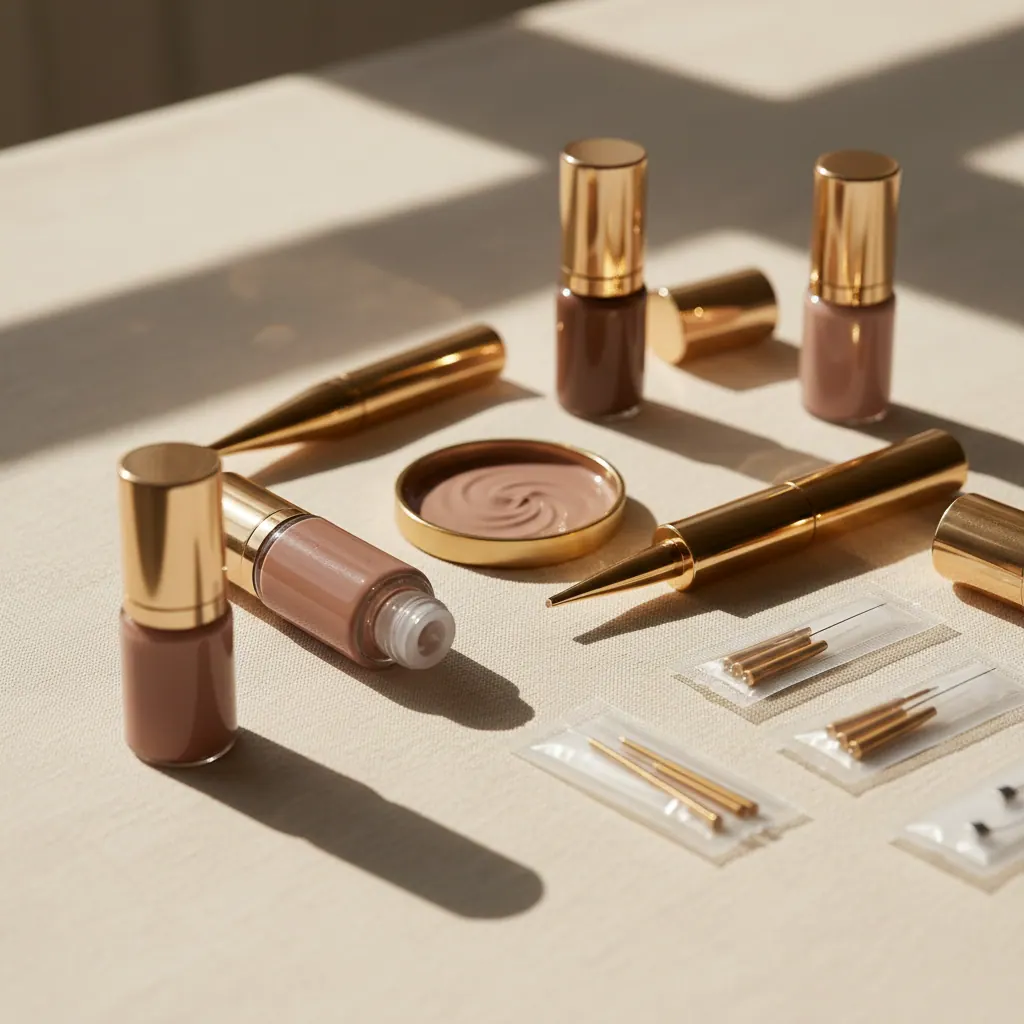
We begin by training artists on the importance of tool selection. For this skin type, we often recommend using a slower machine speed or a specific hand tool configuration that allows for more controlled, deliberate movements. Artists practice preparing their pigment to the ideal consistency for this application, which is slightly different than for other skin types.
Step 2: The Grid Technique Practice
Before drawing a single brow hair stroke or lip line, artists practice what we call the "Grid Technique." They implant a series of small dots in a perfect grid pattern across the synthetic skin. The objective is to achieve uniform dot size, depth, and spacing despite the pore texture. This builds the fundamental hand stability and pressure control required for the real procedure.
FROM THE ARTIST'S BENCH: This drill transforms an artist's approach. It shifts the focus from simply making a mark to understanding how the skin receives it. The confidence gained here directly translates to a calmer, more precise experience for the client.
Step 3: Simulating Real Procedures
Once the grid is mastered, artists move on to executing full procedures on the synthetic skin. They practice microblading hair strokes, powder brow shading, and lip liner application. The key is to observe how the pigment spreads on the synthetic material and to adjust their technique in real-time. They learn to "listen" to the feedback from the skin substitute.
3. Translating the Drill to Live Models and Clients
The ultimate test is applying these skills to real skin. Our academy program includes supervised practice on live models with varying skin types, including those with oily or large-pored complexions.
Building a Customizable Approach
We teach that no two clients are the same. This drill provides a toolkit, not a rigid rulebook. Artists learn to assess pore size and oiliness during the consultation and tailor their needle depth, speed, and pigment choice accordingly. This personalized approach is what sets an Aura Beauty artist apart. You can learn more about our philosophy in our About Justina and Aura Beauty section.
The Importance of Realistic Client Expectations
Part of our training involves managing expectations. We educate our artists on how to clearly communicate to clients with this skin type about potential healing outcomes and the possible need for a slightly different touch-up schedule. Honest communication is a pillar of our client service.
4. The Pharmesthetic Superjection Advantage
This rigorous training is amplified by our unique specialty. As one of the few studios in the Atlanta metro area certified in Pharmesthetic Superjection, we understand skin at an even deeper level. Superjection involves precise, multi-layered placement of specialized solutions for skin revitalization. This advanced knowledge of skin anatomy and healing directly informs our PMU techniques, especially for challenging skin types. Understanding how skin responds and regenerates is crucial for both PMU and our Pharmesthetic treatments.
5. Commitment to Excellence in Every Service
From the first stroke on synthetic skin to the final touch-up on a client, our standard is unwavering. This drill exemplifies our commitment to excellence at Aura Academy. We are dedicated to cultivating artists who are not just technicians, but true artisans who respect the canvas they work on.
If you're seeking PMU from an artist trained to expertly handle all skin types, including oily or large-pored skin, we invite you to book a consultation. Our artists serving Duluth, Suwanee, Buford, Lawrenceville, Atlanta, and Johns Creek are ready to provide you with a confident, personalized experience. Book your appointment online here. For more insights into our process, visit our Academy and FAQ page.